Editor Notes: Nosferatu
A Study in Evolution - From Murnau to Eggers

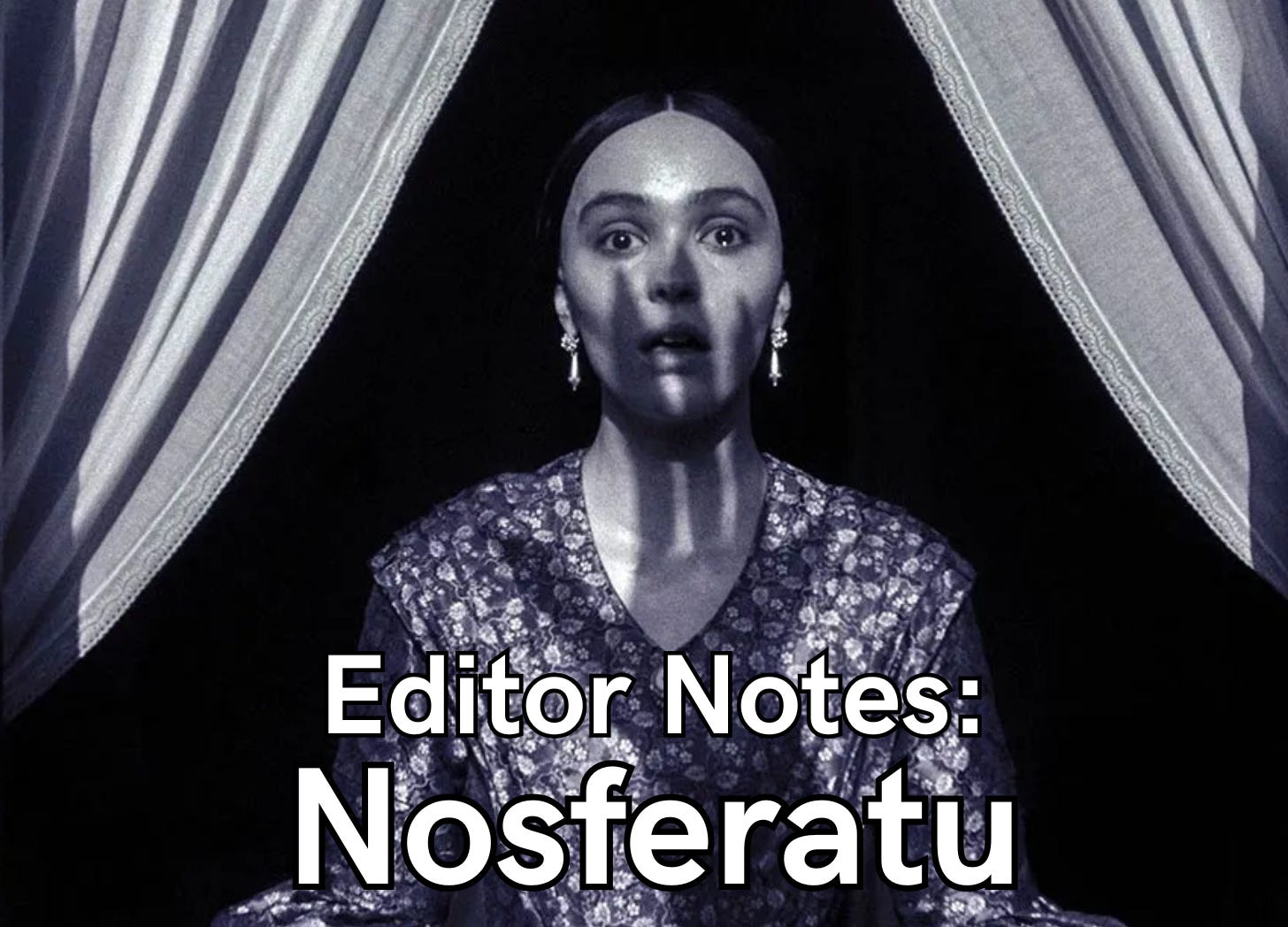
Robert Eggers has built his career exploring how superstition and folklore shape human psychology, from the puritanical paranoia of The Witch to the isolating madness of The Lighthouse. With his latest film, Nosferatu, he turns to vampire mythology, crafting a version that's as much about trauma and belief as it is about supernatural horror.
Now let’s go back 100 years. Murnau's original silent film was an unauthorized adaptation of Bram Stoker's Dracula, forced to change names and settings to avoid copyright issues. A century later, Eggers uses the 1922 Nosferatu film as framework to explore deeper themes than any of his predecessors. Comparing this to earlier adaptations reveals Eggers' unique vision. In order to really compare this film to the cannon, I watched the original 1922 silent film, the 1979 Made for TV movie and Coppola’s 1992 version of the original book, which I’ve also read. So, you are welcome.
While Murnau's 1922 original begins with a relatively happy couple and the 1979 TV version directed by Werner Herzog plays it safer with its supernatural elements, Eggers uses the basic framework as a storyboard to dig into questions about trauma, belief, and redemption.
This latest adaptation’s atmosphere grabs you from its first moments. The film opens with a dream sequence of a woman being taken by a demon, immediately establishing how Eggers will up the sexuality and horror throughout the narrative. Eggers' technical craftsmanship is outstanding. He favors long shots and minimal cutting, allowing his camera to pan slowly through meticulously designed sets before arriving at their reveals. I loved this technique for the film, letting you live in the beautifully detailed sets. His version of the castle, in particular, surpasses even Coppola's ornate 1992 interpretation. These choices create a sense of gradual dread that serves the story's themes.
Where Coppola's Dracula leans heavily into its source material's diary format (a format that bothered me even in the original book) and romantic elements (despite some questionable casting choices - sorry, Keanu), Eggers centers his narrative on the female experience. The impact of trauma and the way society often dismisses women's experiences become central themes. When Professor Franz (played by Willem Dafoe) finally believes in her experiences with the supernatural, it marks the beginning of her path toward healing - a poignant illustration of how recognition can begin to mend what's broken.
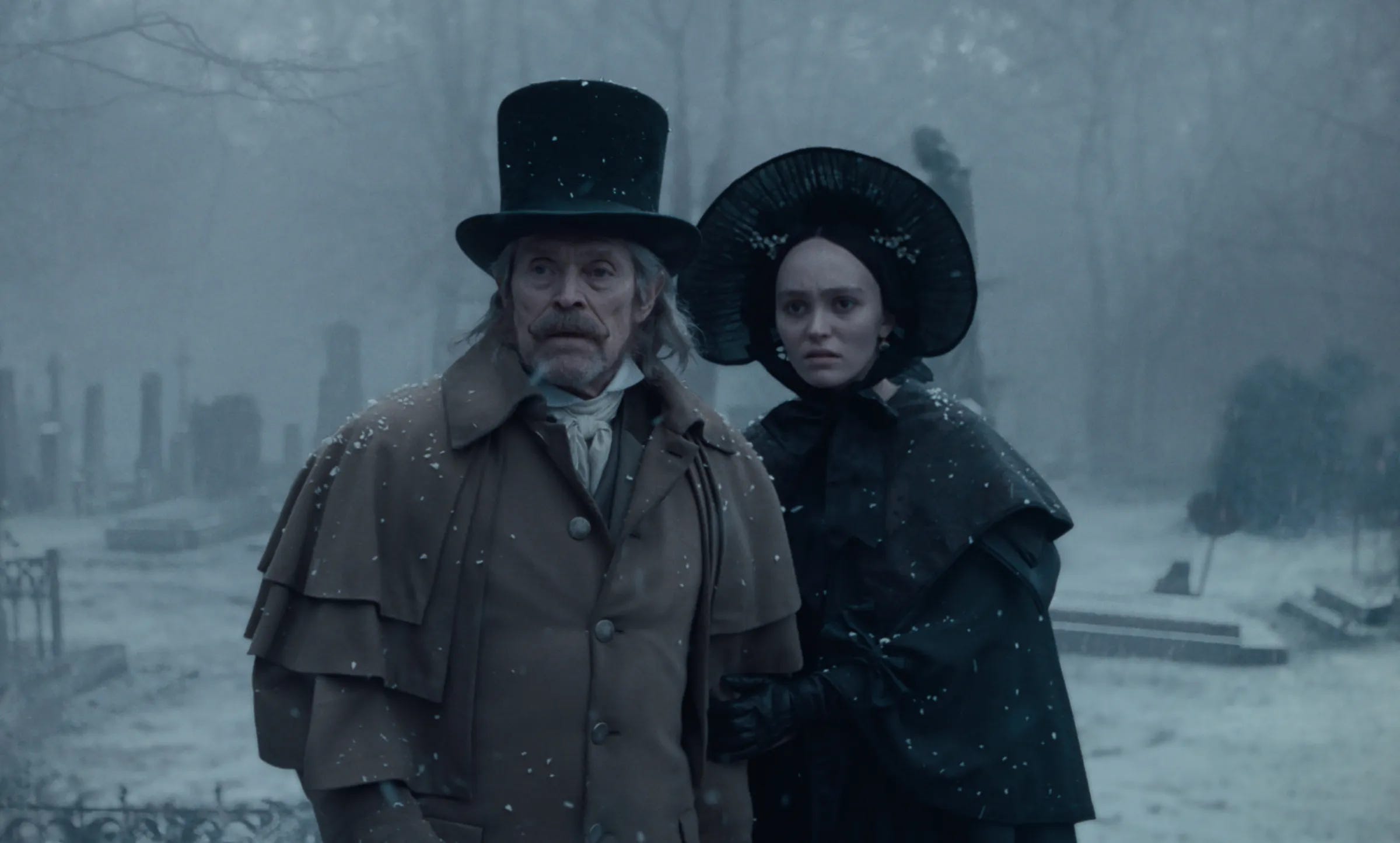
Speaking of Willem Dafoe, he proves once again why he's a treasure of American cinema. His character gets one of the film's most memorable lines about being "blinded by the gaseous light of science," perfectly encapsulating the movie's central conflict between Eastern superstition and Western rationality. The tension between ancient wisdom and modern progress runs throughout the film, creating an interesting subtext.
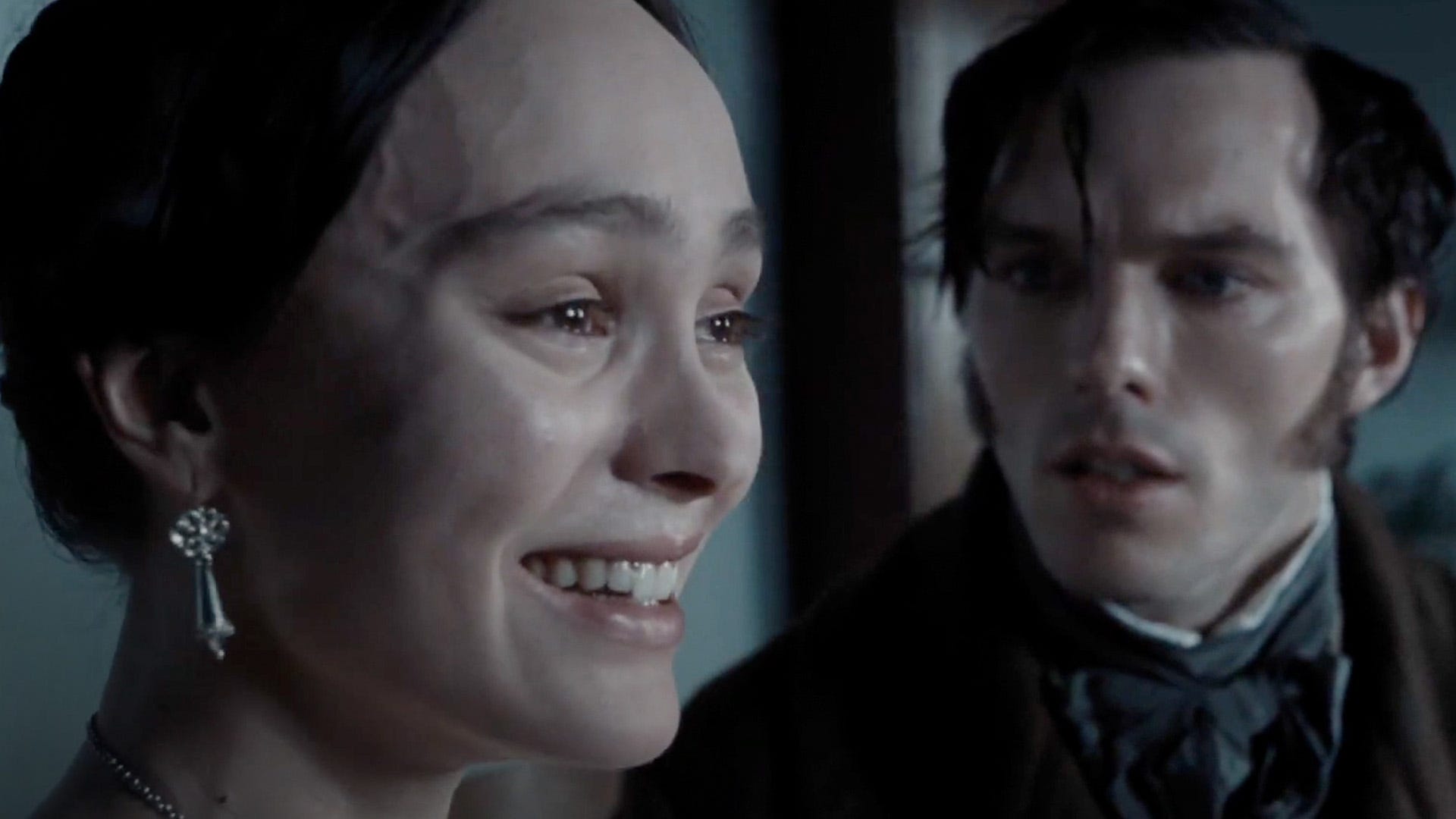
Now, back to the sex of it all. While Coppola's version drew AIDS pandemic parallels that feel dated now (only since modern science has made it a more survivable disease), Eggers examines how society weaponizes shame around sexuality, particularly against women. One of the film's most powerful scenes occurs when Thomas (Nicholas Hoult) confronts Ellen (Lily-Rose Depp) about her premarital encounter with the demon which she has just admitted to. What begins as a typical marital argument transforms into something more layered as the stigma of sexual shame literally manifests in Ellen's physical possession. Depp's physicality in this scene, as throughout the film, is remarkable - her body becoming a battlefield between societal judgment and supernatural forces.
Don't expect traditional horror movie scares here, though. But, this is a film that will haunt your dreams rather than make you jump in your seat. For example, The shadow work throughout pays homage to the 1922 original while creating its own visual language. The sea of rats pouring off the boat, the dark Christmas setting (yes, it's technically a Christmas movie so add it to your random Christmas Movies along with Die Hard), and the uniformly strong performances from the entire cast contribute to a uniquely unsettling atmosphere. Every actor, from the leads to the townspeople warning of impending doom, brings a conviction that makes this world feel lived in.
What makes this adaptation particularly successful is how it balances respect for its source material with modern sensibilities. Unlike Coppola's version, which often feels like "show over themes" (to quote Vincent Canby's observation in the New York Times about it being created with "the enthusiasm of a precocious film student"), Eggers' take feels more measured and purposeful.
At its heart, this Nosferatu is about the limits of human understanding and control. The film builds to a conclusion that suggests light and altruism - not modern science - are needed to defeat evil. As the French obstetrician, Michel Odent, once said, "there are limits to our domination of nature" - a theme that resonates particularly strongly in our current moment of technological hubris thinking that technology alone can save us from our own man made problems.
Overall, while this may not be Eggers' strongest film (I’m a The Northman man myself, but The Witch I still can’t get out of my head), it's a remarkably thoughtful addition to the vampire genre that proves there's still fresh blood to be found (sorry, had to). It's a movie that rewards patience and attention, offering deeper themes beneath its period horror surface. Modern audiences might find its pacing challenging, but for those willing to surrender to its rhythms, there's rich reward in its shadows. Sorry again…